Pictou
Town

Phone : (902) 485-4372
Your Host(s) : Municipal Administration

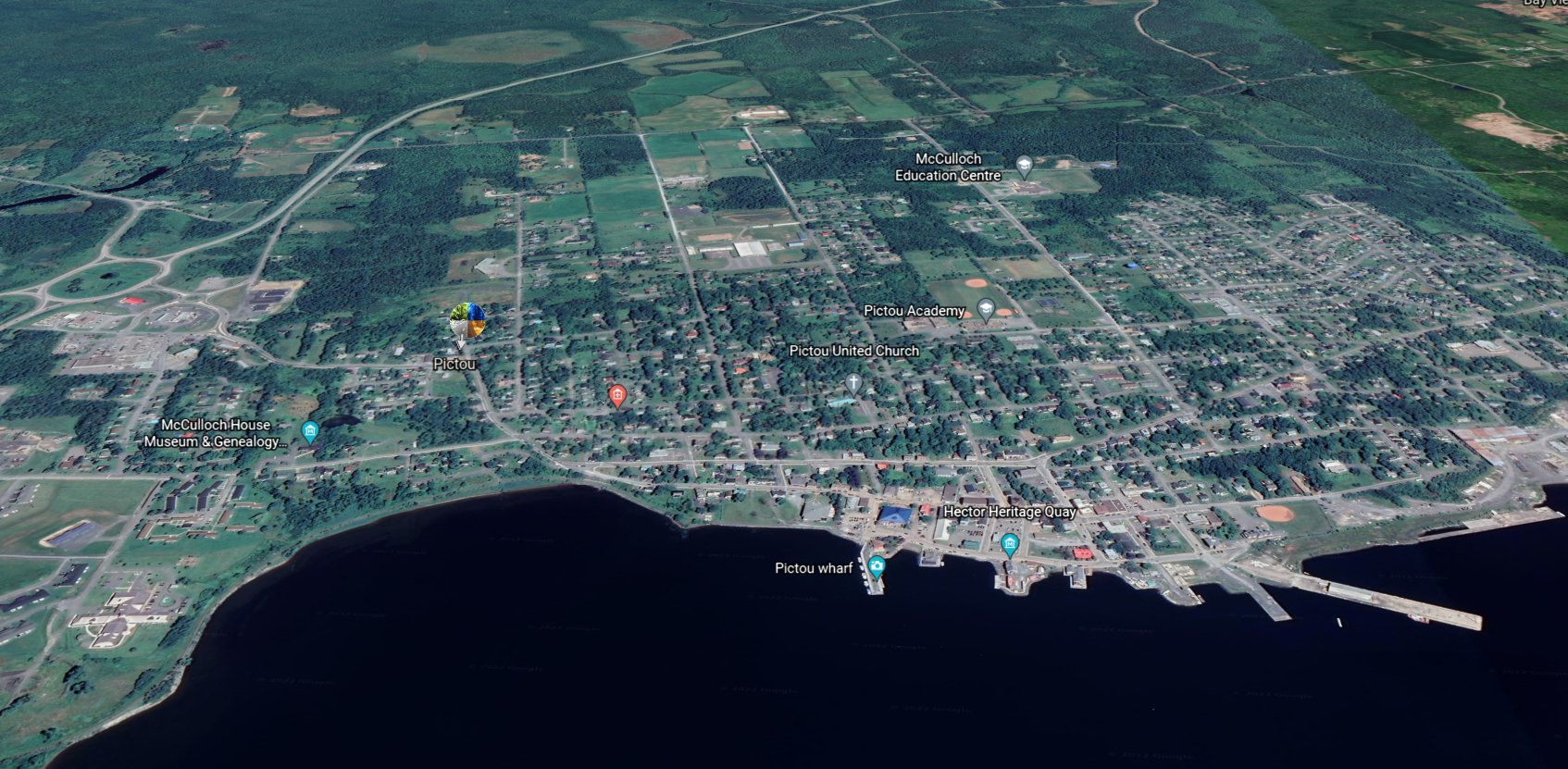
Pictou, NS (Nearby: Trenton, New Glasgow, Westville, Stellarton, Scotsburn)

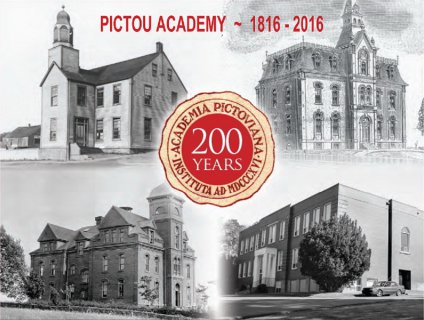
  • Pictou Academy was the first school in Nova Scotia where any student could attend, regardless of their religious affiliation

40 Water St
Pictou, Nova Scotia
B0K 1H0


Nova Scotia Tourism Region : Northumberland Shore

Description From Owner:
  • The name comes from the native word Piktook, an explosion or fire.' Nicholas Denys (1598-1688) shows it on his 1660 map as La Rivière de Pictou. For a time it was called New Paisley.
  • This area is a prime location for sightings of the phantom ship of Northumberland Strait, and the Mi'kmaw reference to 'fire' may reflect a sighting of a fireball on the water. The place was settled in 1767 by a boatload of Pennsylvanians.
  • In 1773, the first wave of Highland Scots arrived; thousands would follow. In 1775 travel between Pictou and PEI was by birchbark canoe, but by 1825 a regular packet was operating and in 1830 the steamboat Richard Smith was put on the route.
  • From its inception the town was beset by fires. In 1883 fire destroyed the St. Lawrence Hotel, the Masonic Hall and other buildings. In 1890 the jail and 20 business establishments burned,
  • and in 1905 a massive blaze destroyed the docking facilities and Revere Hotel. In 1946 the docking facilities were destroyed and again in 1959 as well as part of Ferguson Industries and the Federal Hydrographic Survey buildings.
  • In 1960 there were two more major fires.
  • Pictou Academy was the first school in Nova Scotia where any student could attend, regardless of their religious affiliation
  • With permission from 'Nova Scotia Place Names' David E. Scott 2015


Address of this page: http://ns.ruralroutes.com/Pictou
Have something to say about Pictou?

Tell us, and we'll tell the world!

Your name:
Your email address:
Your phone number:
(optional)   
Your Review:

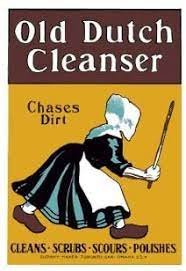
  • The famous logo of a girl wearing a white bonnet on the Old Dutch Cleanser cans was designed by Maude E. Sutherland, daughter of a Pictou doctor.

    In 1907 the company ran a continent wide logo contest and young Maude was the winner.


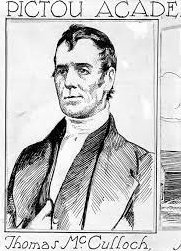
  • Thomas McCulloch

  • Thomas McCulloch

    Influenced Maritimes theological education Thomas McCulloch (1776-1843) was a Scottish-born minister, writer and educator who had a profound influence on theological education in the Maritimes.

    In 1803 he was bound for Prince Edward Island but landed at Pictou because of bad weather, and stayed there.

    He was a member of the secession branch of the Presbyterian Church and founded Pictou Academy, which was incorporated in 1816.

    The academy was unable to get financial assistance from the government or the privilege to confer degrees, so McCulloch and his supporters founded a reform newspaper in which they could set forth their views.

    He also founded a theological college at West River. Some of his theological students were granted degrees by his alma mater, Glasgow University.

    In 1838 McCulloch was named the first president of Dalhousie University, a position he held for the rest of his life.

    He wrote a number of books, the humour and satire in several of them influencing the writings of Thomas Haliburton, creator of the Sam Slick books.


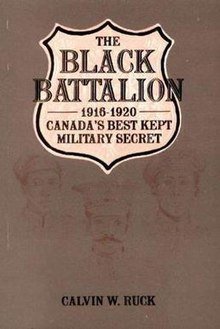
  • Canada's first and only Black Battalion

  • Canada's first and only Black Battalion (1916-20) recruited from across Canada and the US was based in Pictou and Truro before going to Europe in 1917.


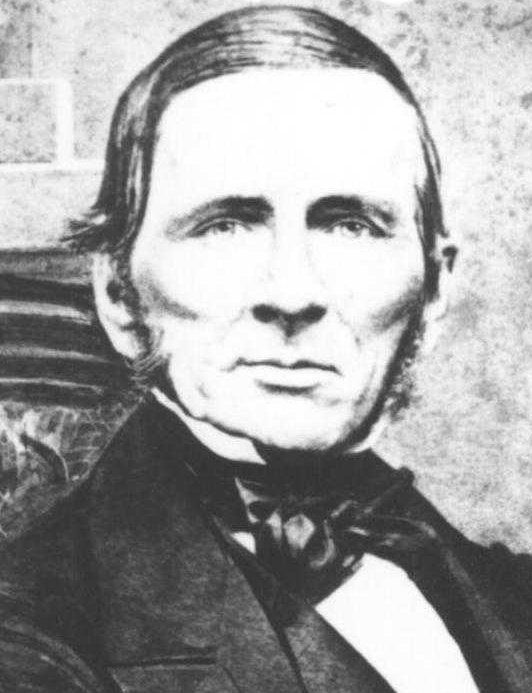
  • James Daniel Bain Fraser (1807-1869)

  • James Daniel Bain Fraser (1807-1869)

    James Daniel Bain Fraser is the son of Daniel Fraser (1769-1850) and the grand son of Roderick MacKay (1746-1829). Roderick was a Hector passenger. JDB Fraser's sister Christina Anna Fraser (1813-1900) married William Ives (1808-1880).

    Canada's chloroform pioneer He had read the notes of a British doctor who successfully used chloroform in 1848, so when his wife was in painful labour with their seventh child, Pictou druggist Fraser manufactured some chloroform and administered it to his wife.

    He was thus the first druggist to make and use chloroform in what was to become Canada, he was immediately censured by fellow Presbyterians.

    They did not accept the use of any painkilling drugs during childbirth.

    Fraser (1807–69) had opened a drug store in Pictou in 1824 but also pursued other interests.

    He was local agent for the Eastern Stage Coach Company, opened a stone quarry at West River, shipping grindstones to Boston, and hired a diving apparatus to recover the guns of HMS Malabar, which had sunk off Prince Edward Island in 1838.
    By 1841 he had three shops in Pictou.


  • Donald Munro's Connecting Link

  • Donald Munro's Connecting Link

    A chain, we know, is as strong as its weakest link. And Donald Munro of Pictou solved the problem of replacing that broken, weakest link in 1885, with his invention of the "connecting link."

    Those links, identical to Munro's prototype, can be found today in most hardware stores.


  • McCulloch House Museum & Geneology Centre

  • McCulloch House Museum & Geneology Centre

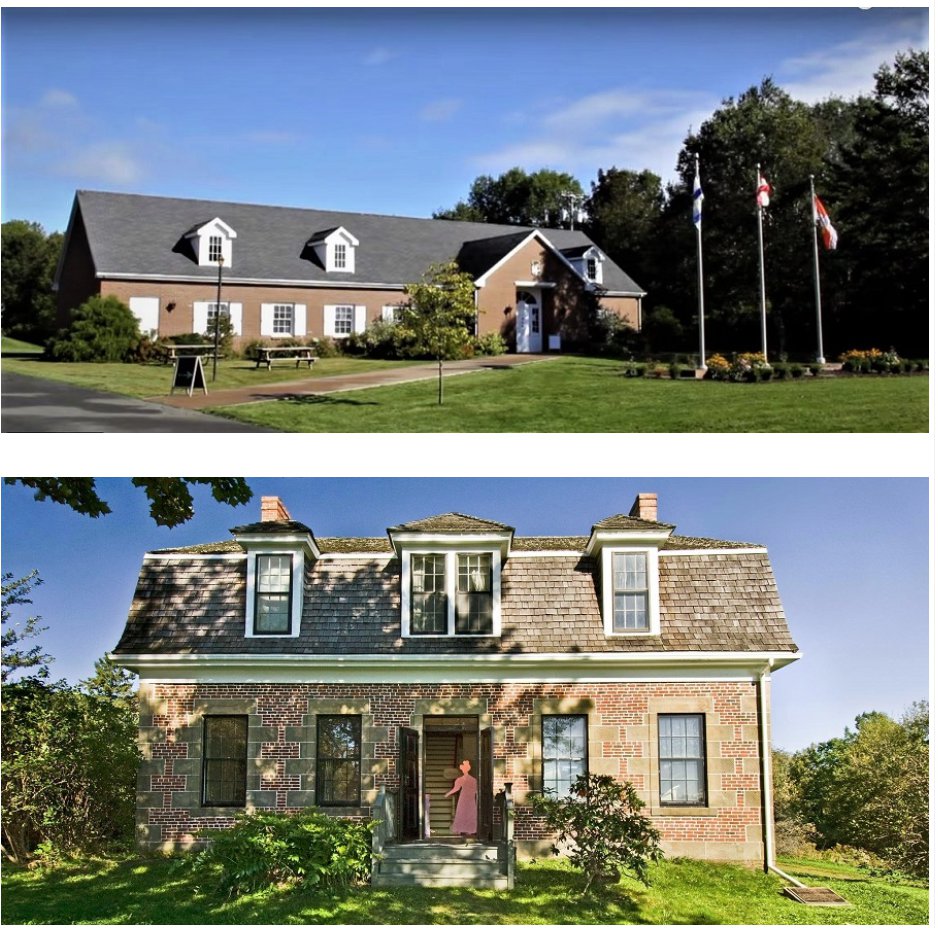
    The McCulloch House Museum at 100 Haliburton Rd. in Pictou was the 1831 home of Dr. Thomas McCulloch, who changed education, religion, politics and social life in Nova Scotia during his lifetime.

    The museum has interactive displays of ships, kilts and big ideas. Open June 1-Oct. 15. The McCulloch Heritage Centre is at 86 Haliburton Road.

    It offers local historical and craft exhibits and has special events through the year. Gift shop. Open year-round.


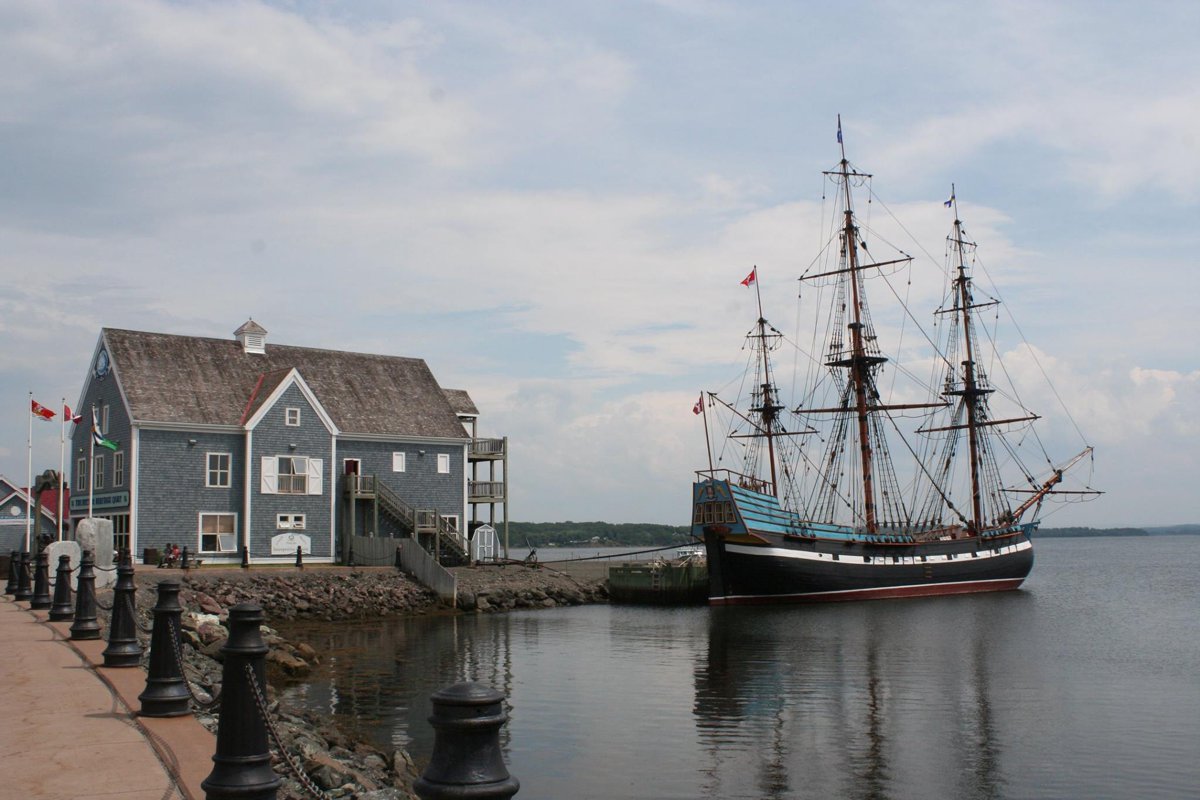
  • Hector Heritage Quay

  • Hector Heritage Quay

    at 33 Caladh Ave., Pictou tells the story of the 18th-century migration of Scots to this area and the role played by the ship Hector, a full-sized replica of which is dockside.

    So many Scots came to this area it earned the nickname "Birthplace of New Scotland." Gift shop.


Visitors to this page: 1,778     Emails sent through this page: 1     This record last updated: March 18, 2022
Nearby: