Lunenburg
Town

Phone : (902) 634-4410
Fax : (902) 634-4416
Your Host(s) : Municipal Administration

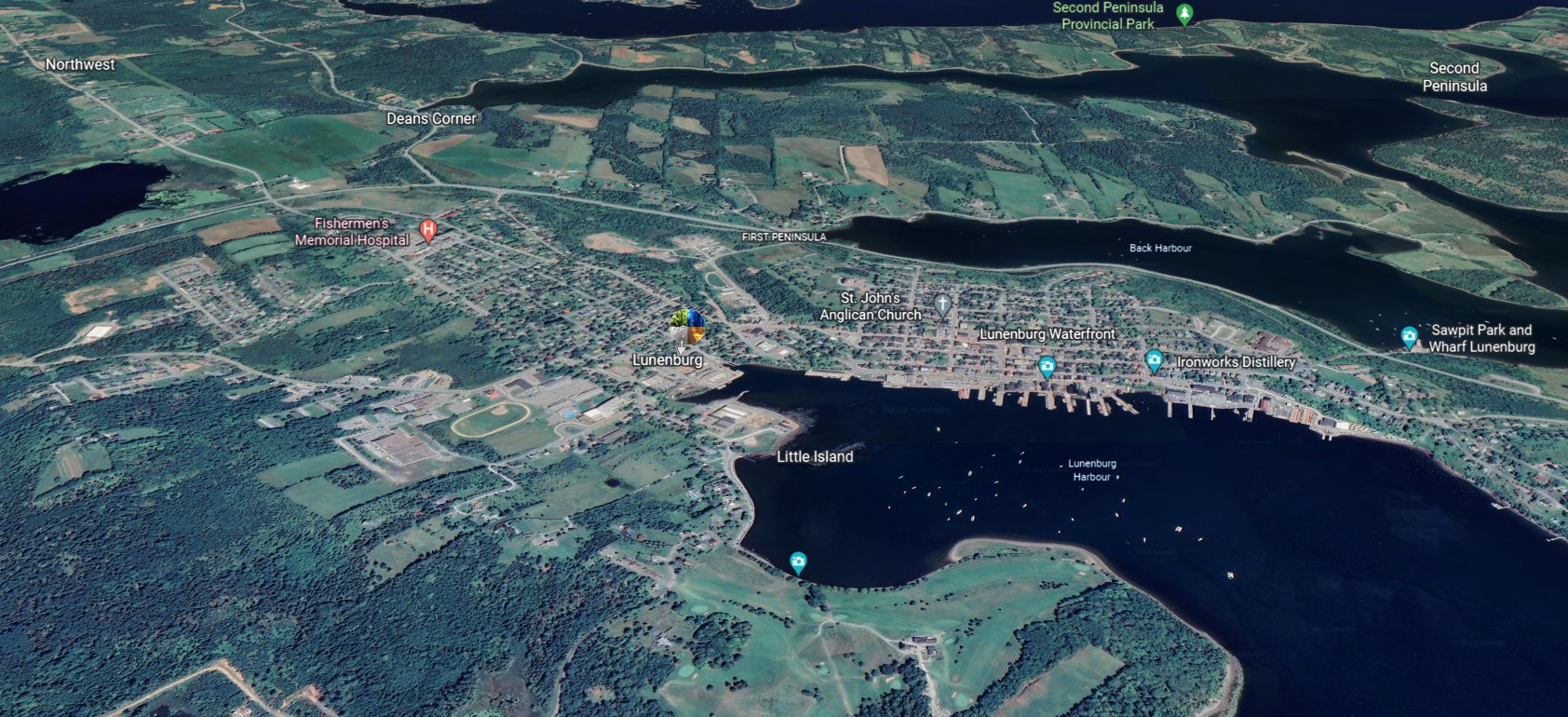
Lunenburg, NS (Nearby: Riverport, Mahone Bay, La Have, Block House, Pleasantville)

119 Cumberland Street, P.O. Box 129
Lunenburg, Nova Scotia
B0J 2C0


Nova Scotia Tourism Region : South Shore

Description From Owner:
  • First called Aseedik, place of clams,' and recorded by Nicholas Denys (1598-1688) as Mirligaiche, 'white or milky surf, referring to its appearance after a storm. This name is considered the origin of the name Malagash.
  • In 1630 Sir William Alexander granted to Sir Claude de St. Etienne, Lord of La Tour and his son, Charles, a large stretch of lands along this coast including 'Mirliguesche.'
  • In 1753 Gov. Peregrine Hopson ordered a survey of lands here, following which 1,400 'Foreign Protestants' recruited from SW Germany and the Montbéliard region of France and Switzerland were settled.
  • The governor and council decreed the new settlement would be called Lunenburg for the royal house of Braunschweig-Lüneburg (in English: Brunswick-Lunenburg).
  • In 1714 the elector of Hanover, Duke of Brunswick-Lunenburg, became King George 1 of England. Lunenburg is the home port of the racing schooner Bluenose, an engraving of which is on the Canadian 10-cent coin.
  • For many years a view of Lunenburg was on the Canadian $100 bill. The town is a treasure trove of architecture from the 1800s, resulting in its listing as a National Heritage Historic District.
  • With permission from 'Nova Scotia Place Names' David E. Scott 2015


Address of this page: http://ns.ruralroutes.com/LunenburgNS
Have something to say about Lunenburg?

Tell us, and we'll tell the world!

Your name:
Your email address:
Your phone number:
(optional)   
Your Review:
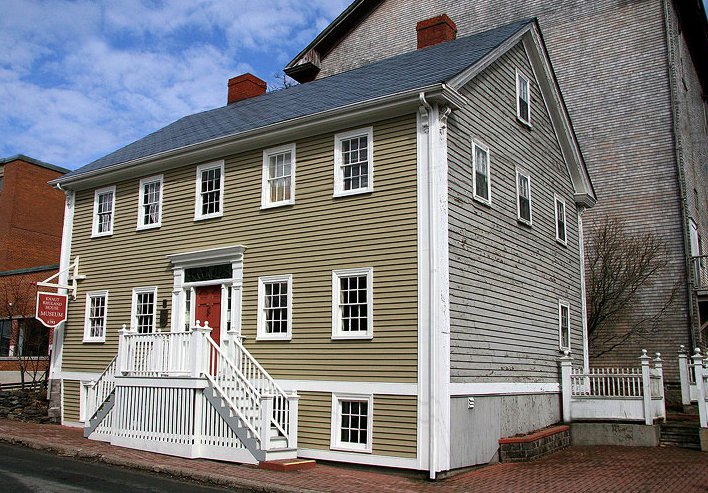
  • Knaut-Rhuland House Museum at 125 Pelham Street is a National Historic Site. The 1793 Georgian house was home to several influential families over the years. Costumed guides show visitors through furnished rooms, seasonal exhibits and gardens.

  • National Historic Site of Canada

  • Lunenburg's 'Architectural Masterpiece'

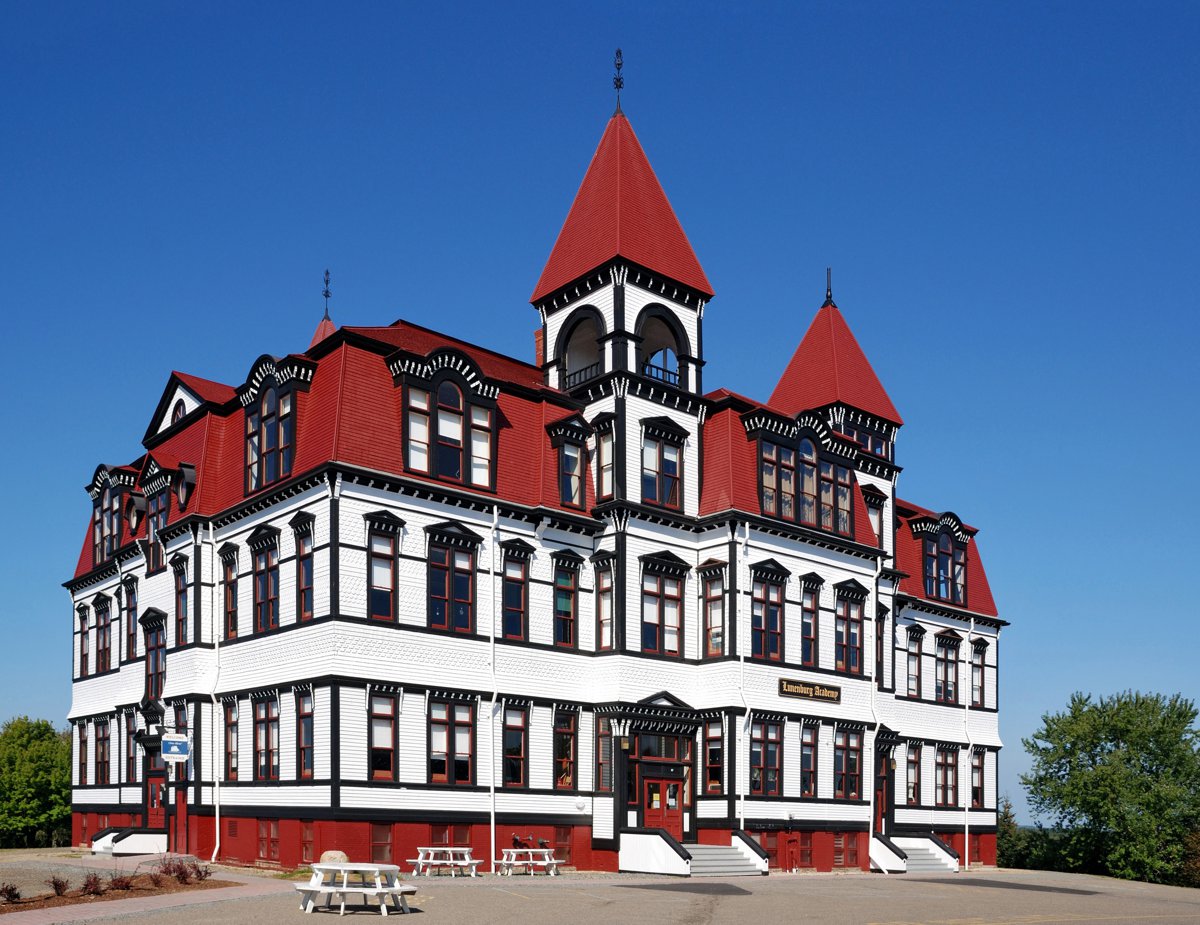
    Lunenburg's landmark is an academy described as "an architectural masterpiece." The school was built in 1894-95 and is still in use.

    The three-storey wooden building sits on a commanding site above the city. The architectural style is Victorian with some gingerbread, a mansard roof and four towers.

    One of the towers contains a 273-kilo (600-pound) bell. Inside there are six large classrooms on each floor with separate cloakrooms for boys and girls.

    The assembly hall can seat more than 400 people. The ceilings are panelled in white wood, the floors and wainscotting are of birch and the rest of the interior is finished in ash and birch.

    Six entrances allow for separation of the sexes except in classrooms. The principal's department is on the second floor, connected with each classroom by electric bells.

    Speaking tubes connect each floor with the basement, which contains six furnaces.


  • Thomas Head Raddall

  • Thomas Head Raddall

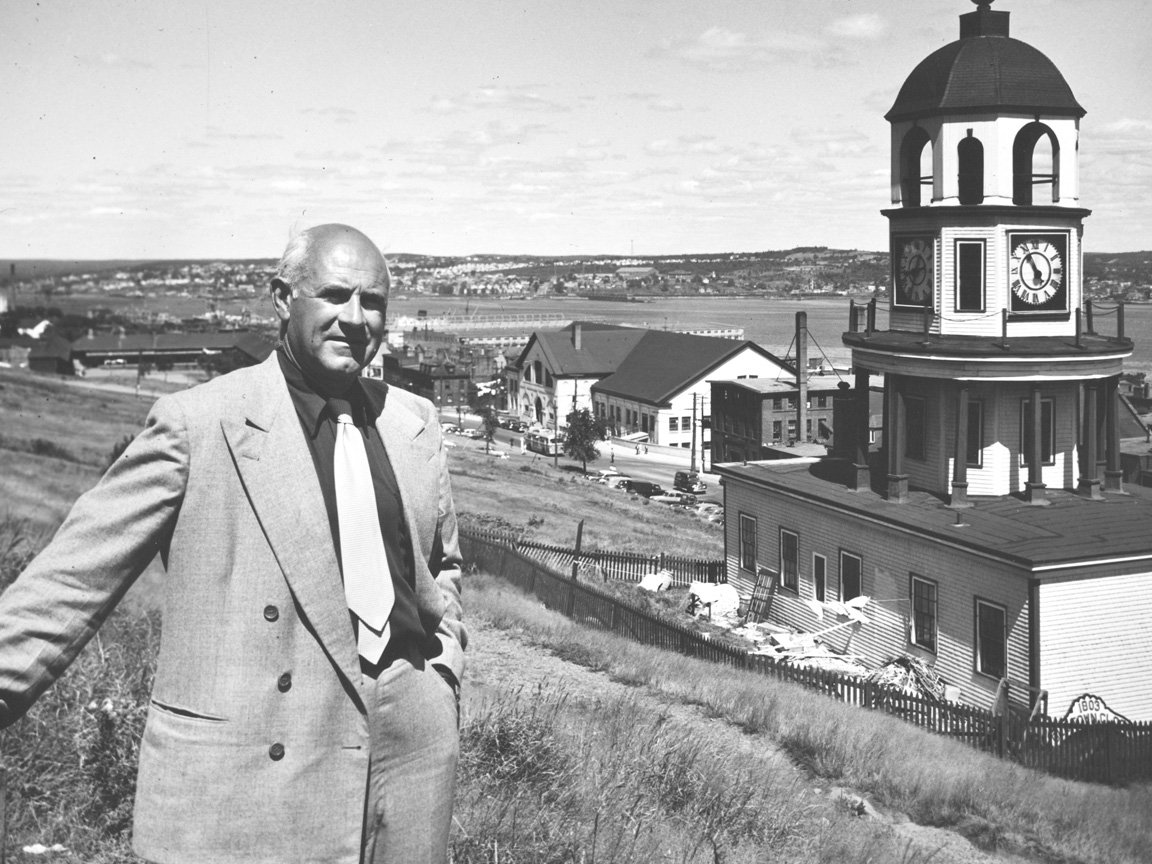
    Prolific award-winning author Three-time winner of the Governor General's Literary Award, Thomas Head Raddall (1903-94) was born in England and moved to Halifax with his family when he was 10.

    His father, Acting Lt. Col. Raddall of the Winnipeg Rifles, was killed in action at Amiens in 1918. Young Raddall lied about his age and went to work at age 15, married at 24 and after having several of his books published, turned to full-time writing at the age of 35.

    During the next 40 years while living in Lunenburg, he published 25 books, more than 70 short stories and dozens of articles on many subjects.

    In 1968 he was asked to become Lt.-Gov. of Nova Scotia, but declined.

    After his death, his son Tom donated money to the Queens County Museum to build the Thomas Raddall Research Centre and the furnishings of his father's study were moved there to create a replica of his work area.


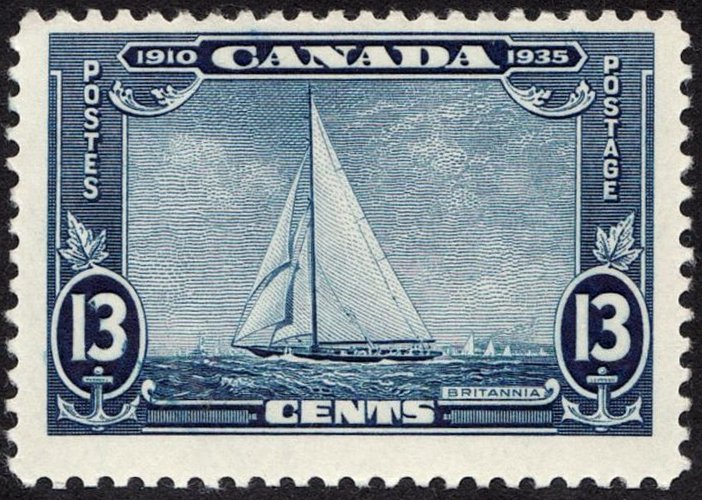
  • The famous Nova Scotia schooner Bluenose,

    immortalized on the back of the Canadian dime and on a blue, 13-cent Canadian postage stamp in 1935,

    sank in 1946 off the coast of Haiti.


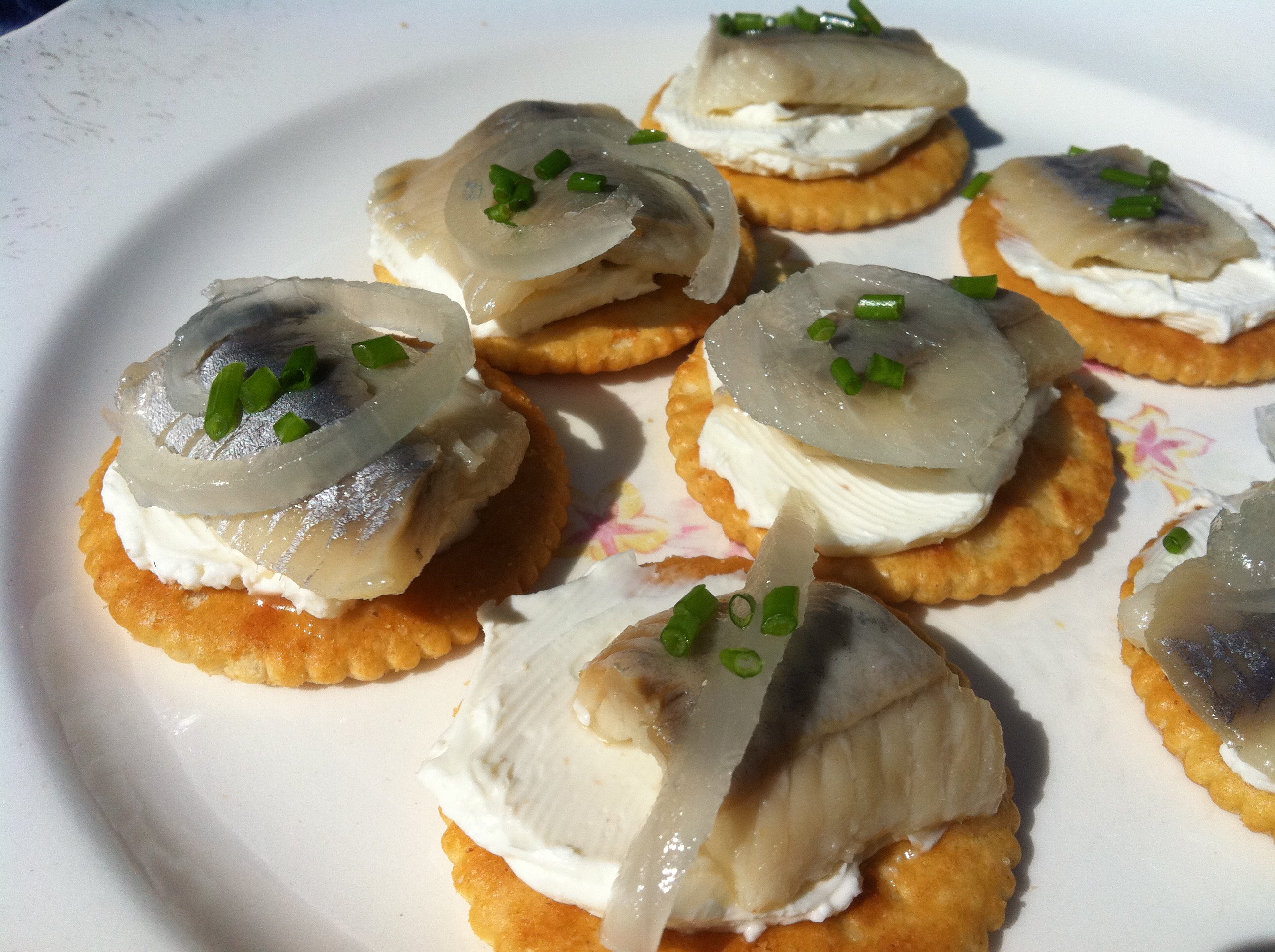
  • Solomon Grundy
  • If you encounter Solomon Grundy on a Nova Scotia menu, the dish is pickled herring pieces.

Visitors to this page: 1,261     Emails sent through this page: 1     This record last updated: March 20, 2022
Nearby: